Exploring the Depths of the South China Sea
May 4, 2023
Night Dive in Tioman Island
May 5, 2024Exploring the Depths of the South China Sea
May 4, 2023Night Dive in Tioman Island
May 5, 2024What Is in a Scuba Tank?
Updated 2026 • Scuba tank air explained for beginners
One of the most common beginner questions in scuba diving is: “What exactly is inside a scuba tank?”
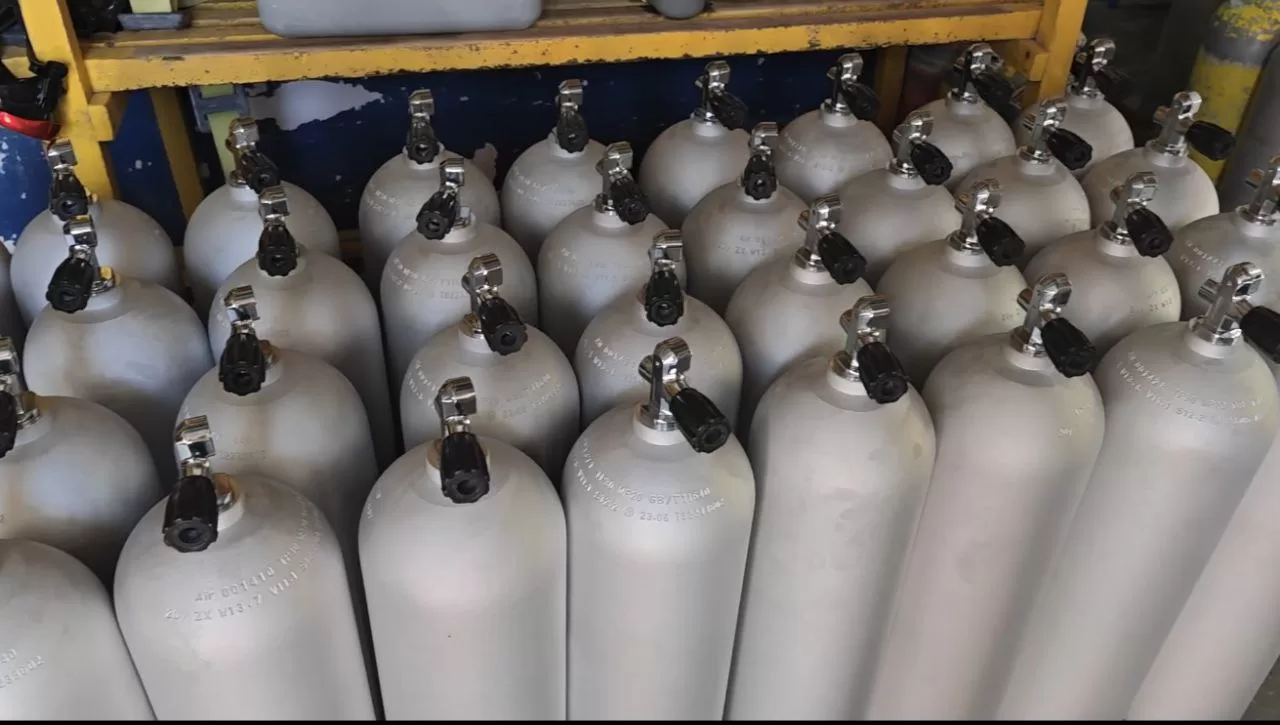
The short answer is simple — most recreational scuba tanks are filled with compressed air, very similar to the air we breathe on land, but carefully filtered, dried, and compressed for underwater use.
Dive knowledge note: This explanation follows standard recreational diving practices taught in internationally recognised scuba certification courses.
The Air Inside a Scuba Tank
The air inside a standard scuba tank consists of:
- Oxygen (O₂) — approximately 21%
- Nitrogen (N₂) — approximately 78%
- Trace gases — about 1% (argon, carbon dioxide, others)
This composition closely matches atmospheric air, allowing the body to function normally while breathing underwater.
Oxygen (O₂)
Oxygen is essential for human survival, but underwater it must be carefully managed. At depth, oxygen becomes more concentrated due to increased pressure, which is why recreational scuba diving follows strict depth limits.
Standard scuba tanks maintain oxygen at around 21%, making them safe for recreational diving within recommended limits.
Nitrogen (N₂)
Nitrogen makes up the majority of the air in a scuba tank. As divers descend, nitrogen dissolves into body tissues due to pressure.
This is why divers must ascend slowly and perform safety stops — to allow excess nitrogen to leave the body safely and reduce the risk of decompression sickness.
Other Trace Gases
Small amounts of other gases may be present, such as argon or carbon dioxide. These gases are carefully filtered and monitored during tank filling and do not play a significant role in recreational diving.
Why Proper Training Matters
Understanding what is in a scuba tank is only part of safe diving. Certified training teaches divers how pressure affects breathing gas, how to manage air supply, and how to dive within safe limits.
- Correct equipment use and maintenance
- Buoyancy and ascent control
- Air management and dive planning
- Emergency awareness and response
Related Scuba Guides
Ready to experience breathing underwater?
Learning how scuba tanks work is the first step toward safe and confident diving.