Tioman Island · Diving · Travel Guide

Frequently Asked
Questions

Useful information for your Pulau Tioman trip — diving conditions, marine life, getting there, and more.

01

What is the Best Time to Dive in Tioman Island?

The best time to dive in Tioman Island is from March to November, which is the island's diving season. During this period, the waters around Tioman are calm, visibility is excellent, and the full range of dive sites are accessible by boat.

The peak months for diving are April to September, when sea conditions are at their calmest and underwater visibility typically ranges from 15 to 30 metres. This is also the best window for spotting larger marine life such as reef sharks, sea turtles, and manta rays.

Tioman Island closes to tourists during the monsoon season from December to February. During these months, heavy rainfall and strong winds make the sea rough and unsafe for diving. All resorts, dive centres, and ferry services cease operations and reopen in March.

For the best overall diving conditions — warm water, clear visibility, and calm seas — plan your trip between April and August.

02

What are the Water Temperature and Visibility like in Tioman Island?

Tioman Island enjoys warm tropical water temperatures between 27°C and 30°C (80°F to 86°F) throughout the diving season from March to November. Most divers are comfortable in a 3mm shorty wetsuit or even just a rash guard during the warmer months of April to August.

Underwater visibility in Tioman typically ranges from 10 to 30 metres, depending on the season, weather conditions, and specific dive site. The best visibility — often exceeding 20 metres — occurs between April and September, when the seas are calmest and plankton levels are lower.

Some dive sites on the western coast of Tioman, such as Tiger Reef and Labas, are known for consistently better visibility due to their exposure to open ocean currents. Nearshore sites may have slightly reduced visibility after rainfall, but conditions generally recover within a day or two.

03

What Kind of Marine Life Can I See While Diving in Tioman Island?

Tioman Island is home to an incredibly diverse marine ecosystem that includes over 180 species of coral and hundreds of species of reef fish. The island's waters sit within the Coral Triangle, one of the most biodiverse marine regions on the planet.

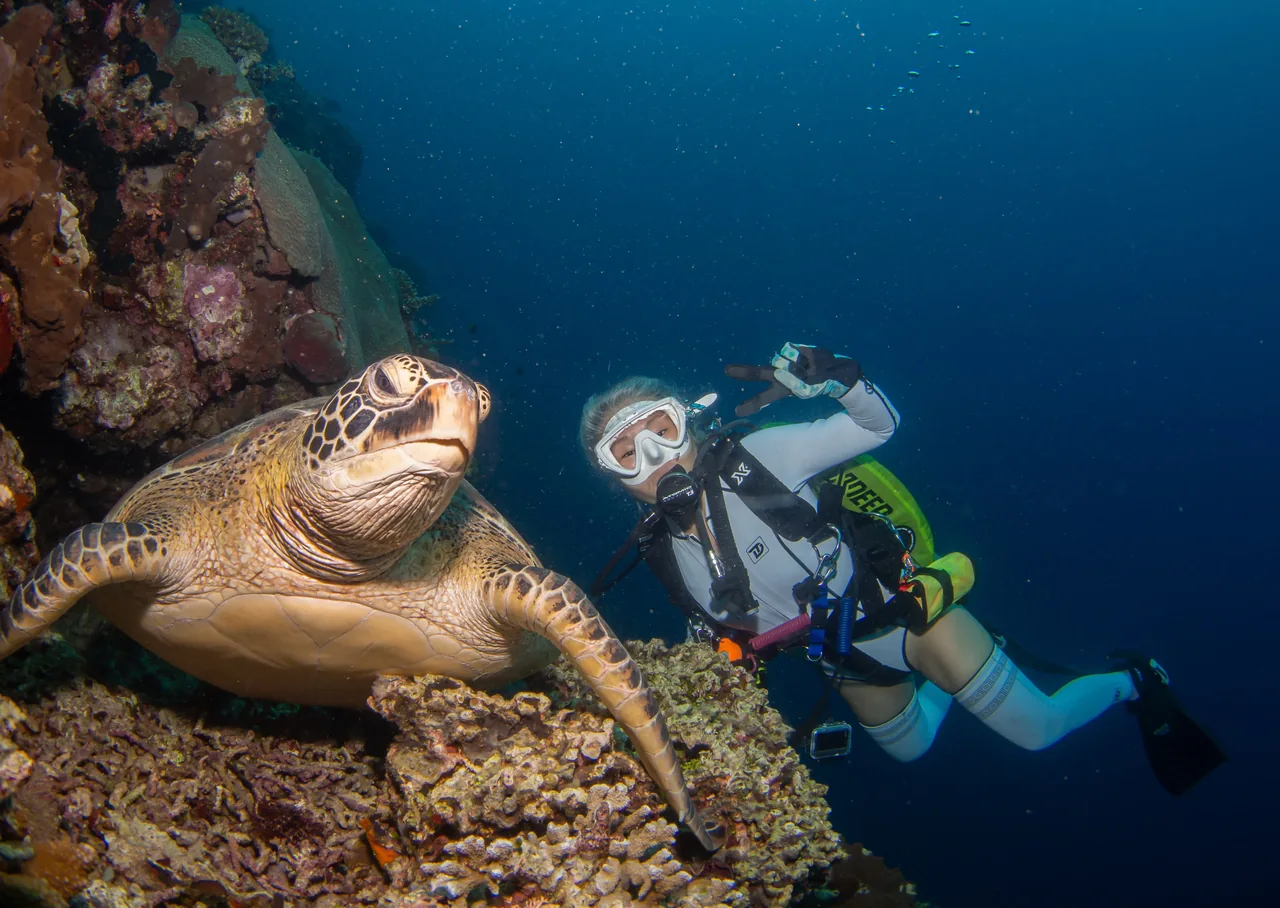
Common marine life sightings include green and hawksbill sea turtles, blacktip reef sharks, blue-spotted stingrays, giant moray eels, cuttlefish, octopus, and large schools of barracuda, fusiliers, and batfish. Tioman is particularly famous for regular turtle encounters — most divers see at least one turtle on every dive.

For macro enthusiasts, Tioman's reefs are rich with nudibranchs, pipefish, frogfish, and various species of shrimp and crabs hiding among the corals. Night dives reveal a whole new world of nocturnal creatures including hunting lionfish, sleeping parrotfish, and bioluminescent plankton.

During the peak season from April to August, lucky divers may also encounter whale sharks, manta rays, and eagle rays passing through Tioman's deeper waters.

04

Is It Necessary to Have a Diving Certification to Dive in Tioman Island?

Yes, a valid diving certification is required to participate in recreational scuba diving in Tioman Island. All PADI dive centres on the island, including Tioman Dive Buddy, require proof of certification before allowing divers to join fun dive trips.

If you do not have a diving certification, you have two options. First, you can enrol in a PADI Open Water Diver course, which is the world's most popular entry-level scuba certification. This 3-day course teaches you all the fundamental skills needed to dive safely to a maximum depth of 18 metres. Upon completion, you receive a globally recognized PADI certification card that never expires.

Second, if you just want a quick taste of diving without committing to a full course, some centres offer a Discover Scuba Diving (DSD) experience — a supervised introductory dive that does not require certification. However, a full Open Water course provides much more comprehensive training and allows you to dive independently at any dive site worldwide.

Tioman Dive Buddy offers the full range of PADI courses from Open Water to Instructor level. Visit our PADI Open Water Course page to get started.

05

How Many Dive Sites Are There in Tioman Island, and Which Ones Are the Best?

Tioman Island has over 20 established dive sites spread around the island, ranging from shallow coral gardens ideal for beginners to deeper reef walls and pinnacles suited for advanced divers.

Some of the most popular dive sites include:

Tiger Reef — a submerged pinnacle rising from 20m to 4m, known for strong currents, schooling fish, and frequent shark sightings. This is widely considered Tioman's best dive site.

Labas — a beautiful rocky island on the southwest coast with excellent visibility, healthy hard corals, and regular turtle encounters at depths of 5 to 18 metres.

Renggis Island — a house reef just off the coast, perfect for beginners and night dives. Features abundant marine life in shallow water including nudibranchs, moray eels, and cuttlefish.

Soyak Island — a small rocky island with stunning coral-covered boulders, sea fans, and frequent blacktip reef shark sightings.

Chebeh Island — Tioman's most remote dive site, offering granite walls dropping to 25m+ with pelagic fish, large groupers, and the chance to spot whale sharks during season.

The best dive site for you depends on your experience level and interests. Tioman Dive Buddy's instructors will help match you with the right sites for your certification level.

06

What is the Depth Range of Dive Sites in Tioman Island?

Dive sites around Tioman Island range in depth from 3 metres to over 30 metres, providing options for every certification level from beginner to advanced diver.

Shallow sites (3–12m) include house reefs like Renggis Island and Tumuk, which are perfect for Open Water students, Discover Scuba experiences, and night dives. These sites feature abundant coral gardens and macro marine life in calm, protected waters.

Mid-range sites (12–20m) such as Labas, Soyak Island, and Fan Canyon offer a balance of depth and biodiversity. These are ideal for newly certified Open Water divers looking to build experience and log dives.

Deep sites (20–30m+) including Tiger Reef, Chebeh Island, and Bahara Rock are suited for Advanced Open Water certified divers. These sites feature stronger currents, larger pelagic fish, and more dramatic underwater topography.

As a PADI-certified diver, you are trained to dive within specific depth limits: Open Water Diver (18m maximum), Advanced Open Water Diver (30m maximum), and Deep Specialty Diver (40m maximum). Tioman Dive Buddy ensures all divers are matched to appropriate dive sites for their certification level.

07

Are There Any Restrictions on Diving in Tioman Island?

Yes, Tioman Island is a gazetted Marine Park and diving is subject to regulations enforced by the Malaysian Department of Marine Park Malaysia (DMPM). These regulations are designed to protect Tioman's coral reefs and marine ecosystems.

Key restrictions include: all divers and snorkelers must pay a Marine Park Conservation Fee before entering the water. Touching, standing on, or collecting any coral, shells, or marine life is strictly prohibited. Spearfishing, fish feeding, and the use of gloves while diving are not permitted within the Marine Park boundary.

All divers must dive with a certified dive guide or instructor from a registered dive centre. Solo diving is not recommended. Divers must carry a valid PADI (or equivalent) certification card and present it to the dive centre before diving.

Certain dive sites may have seasonal or weather-related closures to protect sensitive ecosystems or ensure diver safety. The entire island closes for diving from December to February due to the northeast monsoon season.

Tioman Dive Buddy operates in full compliance with all Marine Park regulations and PADI standards to ensure the safety of divers and the preservation of Tioman's marine environment.

08

Is It Safe to Dive in Tioman Island?

Yes, Tioman Island is considered a safe diving destination suitable for all experience levels, from complete beginners to advanced certified divers. The island's sheltered dive sites, calm conditions during the diving season, and warm water temperatures make it one of the most beginner-friendly dive locations in Southeast Asia.

Safety at Tioman Dive Buddy is a top priority. As a PADI 5 Star Instructor Development Centre (IDC), TDB adheres to the highest international standards of dive safety, equipment maintenance, and instructor training. All instructors are certified in Emergency First Response (EFR) and regularly refresh their rescue and emergency skills.

Dive boats are equipped with first aid kits, emergency oxygen, and communication equipment. Dive groups are kept small to ensure personal attention and safety supervision. Student-to-instructor ratios strictly follow PADI standards.

Common safety concerns like strong currents and deep water are managed by carefully selecting dive sites appropriate for each diver's certification level and experience. Pre-dive briefings cover site conditions, entry and exit procedures, emergency protocols, and marine life awareness.

There are no dangerous marine animals in Tioman that pose a significant threat to divers. The most commonly encountered large animals — sea turtles, reef sharks, and rays — are harmless when treated with respect.

09

How Do I Get to Tioman Island?

The most common way to reach Tioman Island is by ferry from Mersing Jetty in Johor, Malaysia. The ferry ride takes approximately 1.5 to 2 hours depending on sea conditions and the specific village drop-off point on Tioman.

From Kuala Lumpur: Drive or take a bus to Mersing (approximately 4 to 5 hours via the North-South Expressway and East Coast Highway). Multiple bus companies operate daily services from TBS (Terminal Bersepadu Selatan) in Kuala Lumpur directly to Mersing Jetty.

From Singapore: Take a bus from Singapore to Mersing Jetty, which takes approximately 3 to 4 hours. Several bus operators run direct services from various pick-up points in Singapore to Mersing. Alternatively, you can drive across the Causeway and proceed to Mersing via the coastal road.

Ferry services operate daily during the diving season (March to November), with multiple departures throughout the day. It is advisable to book ferry tickets in advance, especially during peak season (school holidays and public holidays), as ferries can sell out.

Tioman Dive Buddy is located in Kampung Genting, one of the main villages on Tioman Island. We offer pier pick-up and drop-off at Genting Jetty for all our guests. Please inform us of your ferry arrival time so we can arrange your transfer.

Note: Ferry tickets are not included in our dive or snorkeling packages and must be purchased separately.

10

What Other Activities Can I Do on Tioman Island Besides Diving?

Tioman Island offers a wide variety of land and water activities beyond scuba diving, making it an ideal tropical destination for both divers and non-divers alike.

Snorkeling: Tioman's crystal-clear waters and shallow coral reefs make it one of the best snorkeling destinations in Malaysia. Tioman Dive Buddy offers full-board snorkeling packages with guided trips to the best sites around the island.

Jungle Trekking: Tioman is covered in ancient primary rainforest and offers several jungle trekking trails, including the popular cross-island trek from Tekek to Juara (approximately 3 hours). The trails pass through lush tropical jungle with wildlife including monitor lizards, monkeys, and hornbills.

Beach Activities: Tioman's beaches are some of the most pristine in Malaysia. Popular activities include swimming, kayaking, stand-up paddleboarding, and simply relaxing on white sand beaches with clear turquoise water.

Island Hopping: Boat trips to smaller surrounding islands such as Coral Island, Renggis Island, and Tulai Island offer additional snorkeling, swimming, and photography opportunities.

Local Culture & Food: Explore the village of Kampung Genting and other settlements around the island to experience local Malay culture, fresh seafood restaurants, and the laid-back island lifestyle. Don't miss Tioman Dive Buddy's own Grill On The Rock restaurant for beachfront dining.

Freediving: For those interested in exploring the ocean on a single breath, Tioman Dive Buddy also offers a PADI Freediver Course — a unique alternative to scuba diving.

Still Have
Questions?

Our team is happy to help. Chat with us on WhatsApp or explore our courses to start planning your Tioman adventure.