


Tioman: One of Malaysia's Best Spots to See Sea Turtles
If there's one thing every diver and snorkeller hopes to see in Tioman Island, it's a sea turtle gliding through the blue. The good news? Your chances are excellent. Tioman is part of a designated marine park, and its protected reefs support a healthy resident population of two turtle species — making encounters not just possible, but routine on most dives.
At Tioman Dive Buddy, our instructors and divemasters spot turtles on the majority of dive trips — sometimes multiple turtles on a single dive. Here's everything you need to know about meeting them.
The Two Sea Turtle Species You'll Meet in Tioman
🐢 Green Sea Turtle (Chelonia mydas)
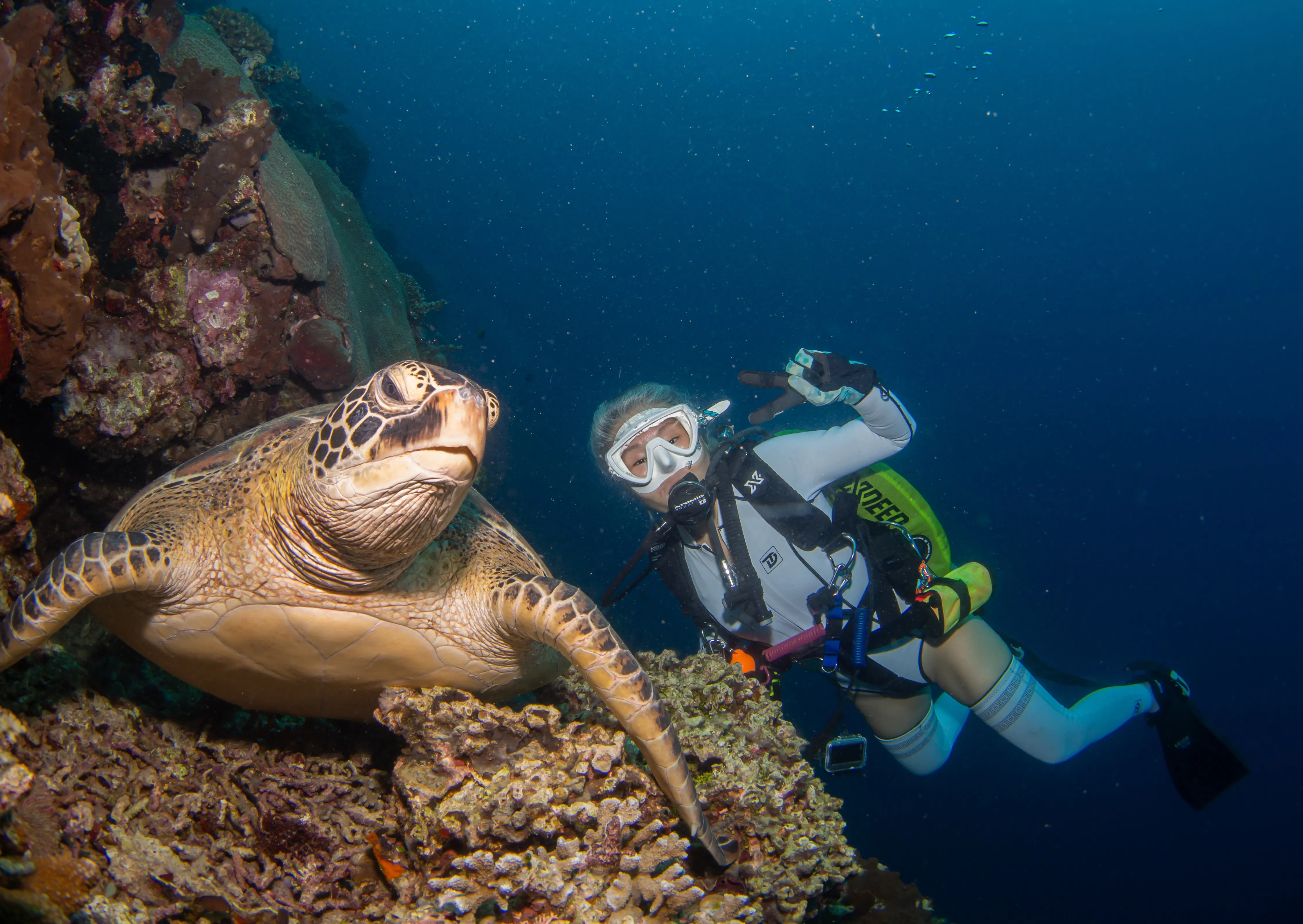
The most commonly spotted turtle in Tioman waters. Green turtles are large — adults can reach 1.5 metres long and weigh over 150kg. Despite the name, their shells are actually brown or olive; the "green" refers to the colour of their fat. They're vegetarians, grazing on seagrass and algae, which is why you'll often find them near reefs and rocky outcrops where their food grows.
Green turtles are generally calm and slow-moving when feeding, making them perfect subjects for underwater photography — provided you give them space.
🐢 Hawksbill Turtle (Eretmochelys imbricata)
Smaller, more streamlined, and easily identified by their narrow pointed beak (the namesake "hawks bill") and beautifully patterned amber-and-brown shell. Hawksbills are critically endangered globally, but Tioman's protected reefs support a stable resident population.
Unlike greens, hawksbills are carnivores — they specialise in eating sponges, which is why you'll often spot them poking around coral crevices and overhangs. They tend to be a bit more curious than green turtles and will sometimes approach divers who stay still and patient.
The 4 Best Dive Sites to See Sea Turtles in Tioman
Renggis Island
Tioman's most famous turtle hotspot. The shallow reef around Renggis hosts resident green and hawksbill turtles year-round. Perfect for Open Water students and snorkellers — turtles often appear within the first 10 minutes of the dive.
Soyak Wreck
The artificial reef structures here attract turtles looking to rest and graze. The wreck itself acts as a turtle "cleaning station" where they linger while small fish remove parasites — incredible to witness.
Tiger Reef
One of Tioman's signature deep dives. Larger green turtles cruise the pinnacle's edges, often alongside schooling barracuda and trevally. Recommended for Advanced Open Water divers due to depth and current.
Labas
The dramatic boulder formations and swim-throughs at Labas are prime hawksbill territory. They love nosing around the cracks for sponges. Bring a torch to peek into the crevices — you might find one resting.
When Is the Best Time to See Turtles in Tioman?
Tioman's dive season runs from March to October, and turtles are present throughout this entire window. However, sightings peak during the calmer months when visibility is at its best. Here's the month-by-month breakdown:
From November to February, Tioman closes for the northeast monsoon and dive operations pause. For more details on the dive calendar, see our Best Time to Dive Tioman guide.
Why Are Turtles So Common in Tioman?
Tioman Island is part of the Pulau Tioman Marine Park, established in 1994 to protect its reefs and marine life. The marine park status means commercial fishing is restricted, anchoring is regulated, and turtle nesting beaches are protected during egg-laying season.
Local conservation initiatives — including those run by Tioman Dive Buddy as a Project AWARE partner — actively monitor turtle populations and contribute to their protection. Every diver who visits responsibly helps fund this work.
How to Behave Around Sea Turtles (Ethical Encounters)
Sea turtles are protected under Malaysian law and international convention. Here's how to enjoy your encounter without disturbing them:
🐢 The Turtle Encounter Code
- Never touch or chase a turtle. They can carry diseases that spread by contact, and chasing causes severe stress.
- Maintain at least 3 metres distance. Let them approach you, not the other way around.
- Don't block their path to the surface. Turtles need to breathe — if you're between them and the surface, move aside immediately.
- No flash photography. The strobe can disorient them. Use natural light or a steady video light at low intensity.
- Stay neutrally buoyant. Avoid kicking up sand or hitting the reef — this is the #1 reason for divers losing visibility and disturbing wildlife.
- Never feed turtles. Feeding disrupts their natural diet and creates unhealthy dependence on humans.
Can Snorkellers See Turtles Too?
Absolutely. Many of Tioman's turtles spend time in the shallow reef flats around Renggis Island and along the coast of Kampung Genting — well within snorkelling depth. If you're not certified to dive, our Tioman Snorkeling Packages include guided trips to two snorkelling sites where turtle sightings are common.
For an even better chance, consider doing a Discover Scuba Diving session — no certification required, and you'll dive to depths where turtles hang out more often.
Frequently Asked Questions
How many sea turtles live in Tioman Island?
While there's no official population census, Tioman's marine park supports a stable resident population of green and hawksbill turtles. Local dive operators report consistent sightings on most dive trips throughout the season, suggesting healthy numbers in the dozens to low hundreds across the island's main dive sites.
Are sea turtles dangerous to divers?
No. Sea turtles are completely harmless to humans and generally indifferent to divers who keep their distance. They have no predatory instincts toward people. The only "danger" is accidentally getting in their way when they need to surface for air — which is why we always recommend giving them a clear path upward.
What's the difference between green and hawksbill turtles?
Green turtles are larger (up to 1.5m), have a rounded head, and eat seagrass. Hawksbills are smaller (up to 1m), have a distinctive pointed beak-like mouth, and feed on sponges. Hawksbills also have more colourful, overlapping scutes on their shells.
Can I see turtle nesting in Tioman?
Tioman has several protected nesting beaches, but nesting and hatching events are seasonal (typically May to September) and access is restricted to protect the eggs. If you're interested in turtle conservation, ask us about Project AWARE events and conservation dives — we sometimes organise these in partnership with local rangers.
What should I do if I see an injured turtle?
Don't approach or touch it — note the location and surface conditions, then report it to your divemaster or dive centre immediately. We'll contact local marine park rangers and the wildlife department who handle rescue and rehabilitation.
Do I need a special course to dive with turtles?
No special certification needed. A standard PADI Open Water certification is enough to dive most of Tioman's turtle hotspots. For deeper sites like Tiger Reef, you'll want your Advanced Open Water. If you're brand new, our Discover Scuba Diving intro session is enough to give you a real chance of meeting one.
Ready to Meet Tioman's Turtles?
Book your dive trip with Tioman Dive Buddy and let our experienced PADI instructors guide you to the island's best turtle hotspots. Beginners welcome — we'll handle everything from gear to certification.