Technical Diving Tioman Dive Buddy Updated May 2026 7 min read Quick Answer
Technical diving (or "tec diving") is a form of scuba diving that goes beyond recreational limits — deeper than 40 metres, with planned decompression stops, multiple gas mixtures, and specialized equipment like twin tanks. PADI Tec courses (Tec 40, Tec 45, Tec 50) train you to dive safely in this advanced realm using systematic skills, redundant gear, and rigorous gas planning.
Key Takeaways
- Technical diving goes beyond the 40m recreational limit, into the 40–50m+ range
- It requires planned decompression stops — you cannot ascend directly to the surface
- You'll use twin tanks, multiple deco gases, and tec-specific BCDs and regulators
- PADI's Tec pathway starts with Tec 40 and progresses through Tec 45, Tec 50, and Trimix
- Prerequisites are strict: Advanced Open Water minimum, 30+ logged dives, age 18+
Why Tec Diving Exists
Recreational diving is designed around one core safety principle: you must always be able to safely ascend directly to the surface in an emergency. This is called the "no-decompression limit" (NDL). For most depths, the NDL gives you enough bottom time to enjoy the dive without accumulating nitrogen that would require decompression stops on the way up.
But the most stunning underwater landscapes — deep wrecks, dramatic walls, undiscovered marine life zones — often sit deeper than 40 metres. To reach them safely, divers need a different training framework. That's what technical diving provides.
The Core Differences Between Tec and Rec Diving
Technical diving introduces five major changes:
- Depth — Tec dives go to 40m (Tec 40), 45m (Tec 45), 50m (Tec 50), and beyond with Trimix.
- Decompression — You cannot ascend directly. Multiple decompression stops at specific depths are mandatory.
- Gas mixes — Beyond air and nitrox, tec divers use enriched air (EAN50, 100% O₂) as decompression gases, and Trimix (helium-oxygen-nitrogen blends) for the deepest dives.
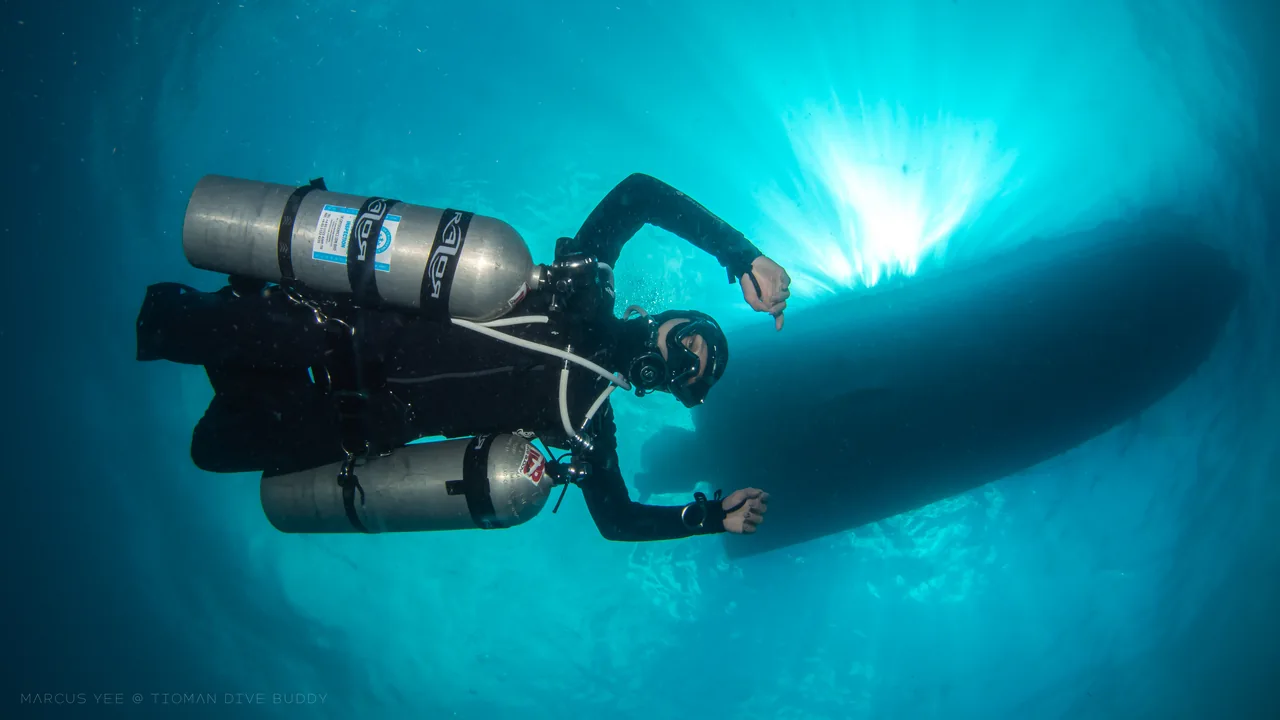
- Equipment — Twin tanks (or sidemount), redundant regulators, deco stage cylinders, tec-specific BCDs, dual computers.
- Mindset — Planning is everything. You write dive plans, calculate gas requirements, run contingency scenarios, and follow protocols rigidly.
The PADI Tec Pathway
PADI structures technical diving as a progressive series. Each level builds on the previous:
Tec 40 — Your entry into technical diving. Depths to 40m, single decompression stop using EAN50. This is where you learn the fundamentals: gas planning, twin-tank configuration, gas switches, and team protocols.
Tec 45 — Extended-range decompression diving to 45m, using 100% oxygen for accelerated decompression. Skills like multi-stop deco, lost-gas procedures, and DSMB deployment from depth become central.
Tec 50 — Full multi-gas decompression diving to 50m. Two decompression gases, longer bottom times, charter boat operations. The Trimix add-on extends this with helium-based gas mixes for narcosis management.
At Tioman Dive Buddy, all three courses run as 4-day / 3-night programs at RM 2,500 each, or RM 6,500 for the full bundle.
Who Qualifies for Tec Diving?
PADI sets specific prerequisites for Tec 40 (the entry level):
- PADI Advanced Open Water Diver (Rescue Diver recommended)
- PADI Enriched Air Diver (Nitrox)
- PADI Deep Diver, or proof of 10 dives to 30m or deeper
- 30 logged dives minimum
- Age 18+
If you're missing any of these, build them first. The skills they teach — buoyancy, navigation, problem-solving — are foundational for the more demanding tec environment.
Common Misconceptions About Tec Diving
"Tec diving is just for extreme divers." Not really. Tec divers are typically methodical, calm, and detail-oriented — the opposite of thrill-seekers. The mindset is closer to engineering than adrenaline sports.
"It's too dangerous." It carries higher risk than recreational diving, but the risk is managed through training, planning, and equipment redundancy. Properly trained tec divers have excellent safety records.
"You need to be young and ultra-fit." You need to be medically fit (a doctor's clearance is mandatory) and reasonably comfortable in water. Many tec divers are in their 40s, 50s, and 60s.
Is Tec Diving Right for You?
Ask yourself three questions:
- Do you enjoy the planning and preparation side of diving as much as the dive itself?
- Are you comfortable with strict protocols and procedures?
- Do you have at least 30 logged dives, AOW, and Nitrox certifications?
If all three are yes, you're a good candidate. Start with a "Discover Tec" experience at your dive centre before committing to a full course.
Frequently Asked Questions
How deep can you go with PADI Tec courses?
PADI Tec 40 takes you to 40m, Tec 45 to 45m, and Tec 50 to 50m. The Trimix add-on extends to 75m+ with appropriate gas mixes.How long does it take to become a tec diver?
Each PADI Tec course is 4 days / 3 nights. The full Tec 40 → 45 → 50 pathway can be completed as a 7-day / 6-night bundle.Is tec diving harder than rescue diver training?
They develop different skills. Rescue Diver is about reacting to emergencies; Tec is about preventing them through planning. Most divers find Tec more mentally demanding.Can I learn tec diving in Tioman, Malaysia?
Yes. Tioman Dive Buddy offers all three PADI Tec courses (Tec 40, Tec 45, Tec 50) plus the Trimix add-on, year-round during diving season.How much does PADI Tec cost in Malaysia?
RM 2,500 per course at Tioman Dive Buddy (4D3N), or RM 6,500 for the full Tec 40 + 45 + 50 bundle (7D6N).About the Author
Tioman Dive Buddy — PADI 5★ IDC in Kampung Genting. We dive Tioman's reefs daily during season and have trained thousands of divers since 2010.